

Early Detection of Compressed Air Leaks Saves Money
- wesleyholder
- Apr 17
- 4 min read
If you’re running an industrial facility that utilizes compressed air, you’ve got a system that works hard around the clock. What you might not realize is how much money is quietly leaving your operation every time there’s a leak you haven’t found yet. Early detection of compressed air leaks saves money in ways that show up directly on your bottom line, and the longer those leaks go unaddressed, the more they cost you. Here’s what you need to know.
The Real Cost of a Compressed Air Leak
Compressed air is one of the most expensive utilities in an industrial facility. Generating it requires significant energy, and when that air escapes before it does any useful work, you’re paying for something you never got. The U.S. Department of Energy estimates that leaks can account for 20 to 30 percent of total compressor output in a typical facility. At current energy rates, that translates to thousands of dollars per year in waste, and that’s before you factor in the added wear on your equipment from a compressor that’s running harder.
How Undetected Leaks Drive Up Energy Bills
Every leak in your system forces your compressor to work overtime. When air escapes at fittings, valves, or connections, the system pressure drops, and your compressor responds by cycling more frequently or running longer to keep up. That extra runtime burns more electricity, and electricity costs money. A single 1/8-inch leak at 100 PSI can waste thousands of dollars annually on its own. Scale that across a system with multiple smaller leaks, and you’re looking at a serious recurring expense that has nothing to do with actual production output.

Equipment Wear Adds to the Financial Damage
The energy waste is the most visible cost, but it’s not the only one. A compressor that runs harder and longer than it’s designed to ages faster. Bearings, seals, and valves all experience accelerated wear when the system is working to compensate for lost pressure. That means more frequent maintenance intervals, more replacement parts, and a shorter overall equipment lifespan. When you factor in the cost of a compressor rebuild or early replacement, the financial case for catching leaks early gets even stronger.
Production Losses You Might Not Be Tracking
Pressure drop from leaks doesn’t just cost you on the energy side. It also affects the equipment and tools that depend on consistent air pressure to operate correctly. When pressure at the point of use falls below spec, you get inconsistent tool performance, slower cycle times, and in some cases, production quality issues that require rework. Those losses are harder to quantify than an energy bill, but they’re real, and they compound the financial impact of leaks that go undetected.
Why Small Leaks Still Carry a Big Price Tag
It’s easy to dismiss a small leak as a minor problem. The hiss is quiet, production keeps moving, and there’s no immediate crisis. But small leaks don’t stay small. They develop at fittings, couplings, hoses, valves, and thread connections, where pressure and temperature cycles gradually wear down seals. A slow leak at one fitting today can become a significant pressure loss across multiple points six months from now. Catching leaks while they’re small is always cheaper than addressing the full financial damage after they’ve grown.
How To Build a Leak Detection Program

If you want to stop paying for air you’re not using, you need a leak detection program in place. Here’s a step-by-step guide to setting one up.
Step 1: Run a Full System Audit
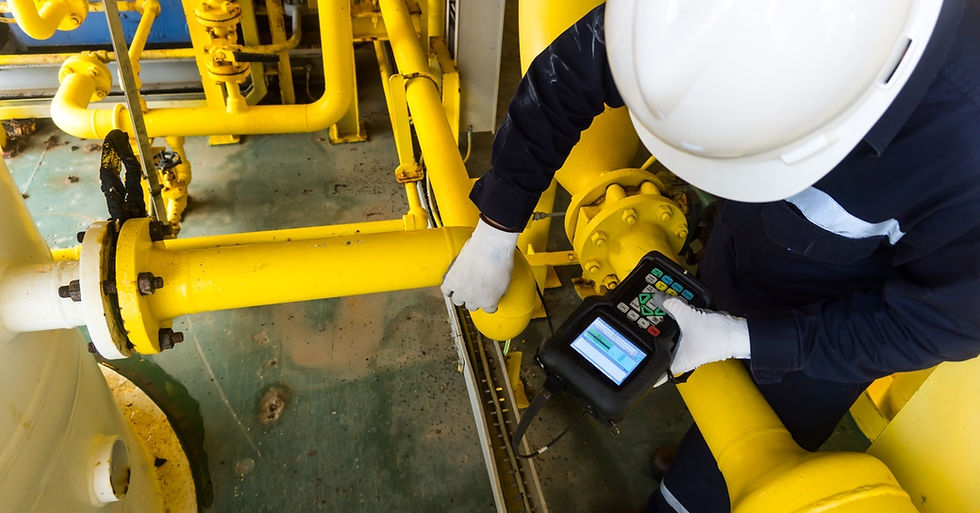
Start with a comprehensive scan of your entire compressed air system while it’s running. Ultrasonic leak detection is the industry standard for this. It picks up the high-frequency sound that leaks produce, which is inaudible to the human ear but easy to identify with the right equipment. An ultrasonic detector lets you scan overhead lines, tight spaces, and areas behind equipment without taking anything offline. If you find a leak, document it by location and estimated severity.
Step 2: Prioritize and Repair Systematically
Every leak deserves immediate repair. Once you have found all the failing points in your inspection, address the highest-volume leaks first. A single large leak can waste more compressed air than a dozen smaller ones combined, so starting at the top of your list gets you the fastest return.
Work through your documented leak points in order, verify each repair with a follow-up scan, and track the results.
Also, keep records of what was repaired and when. If you report to stakeholders, you should also note what the estimated savings of the fix were to build a clear picture of your leak-detection program’s financial impact over time.
Step 3: Schedule Ongoing Scans
Leak development is continuous, so your inspections should be as well. Fittings loosen, seals wear, and new connections get added as systems evolve. A one-time audit finds what’s there today, but it doesn’t protect you from what develops next quarter.
Most industrial facilities benefit from quarterly or semi-annual ultrasonic scans, depending on system size and age. Annual-only programs leave too much time for new leaks to compound before they’re caught.
Step 4: Partner With Professionals
A well-run internal program covers a lot of ground, but the most effective leak detection programs involve experienced professionals who know exactly where to look and how to interpret what they find. Working with a qualified compressed air specialist gives you access to better equipment, deeper system knowledge, and documented reporting that supports capital planning and maintenance budgeting.
The Numbers Make the Case
Early detection of compressed air leaks saves money at every stage, from lower energy bills and reduced equipment wear to fewer production interruptions and longer compressor life. The cost of a detection program is a fraction of what undetected leaks take from your operation year after year. Getting ahead of it now is the straightforward financial decision.
If you’re looking to partner with a professional, get in touch with IQ Compression. We specialize in compressed air system installation and maintenance for industrial facilities. We can help you build and execute a leak detection program that delivers measurable cost savings. Whether you need a full system audit, targeted repairs, or a fresh start, our team has the experience to get it done right. Call us at (713) 300-1869 to talk through what your system needs.


Comments